More on Exams
🩺 The Critical Role of Routine Physical Exams
Routine physical exams are the most fundamental component of your pet's regular healthcare and are absolutely essential for a veterinarian to provide accurate care and treatment.
Why Exams Are Crucial
A comprehensive physical exam allows the veterinarian to establish a complete picture of your pet's health, which is impossible to do through conversation alone. During this "nose-to-tail" assessment, the vet can:
Detect Subtle Changes: Pets are masters at hiding illness. A physical exam often reveals minor changes (like a heart murmur, a small lump, dental disease, or joint pain) that go unnoticed by owners but are crucial indicators of developing illness.
Establish Baselines: Regular exams create a historical health record and establish normal baselines (weight, heart rate, temperature) for your individual pet, making it easier to spot when something goes wrong later.
Optimize Preventive Care: Exams are the opportunity to conduct necessary screening tests (like bloodwork, urinalysis, or fecal exams) and ensure that parasite prevention and vaccination schedules are up-to-date and appropriate for the pet's age and lifestyle.
The Necessity for Prescriptions
Without a current physical exam, veterinarians are often legally and ethically prohibited from diagnosing conditions, making treatment recommendations, or prescribing most medications.
This requirement ensures the vet has a valid Veterinarian-Client-Patient Relationship (VCPR). The VCPR guarantees that the pet is being treated safely, the correct diagnosis is made before prescribing powerful drugs, and the vet can follow up on the pet's progress.
EXAM GALLERY
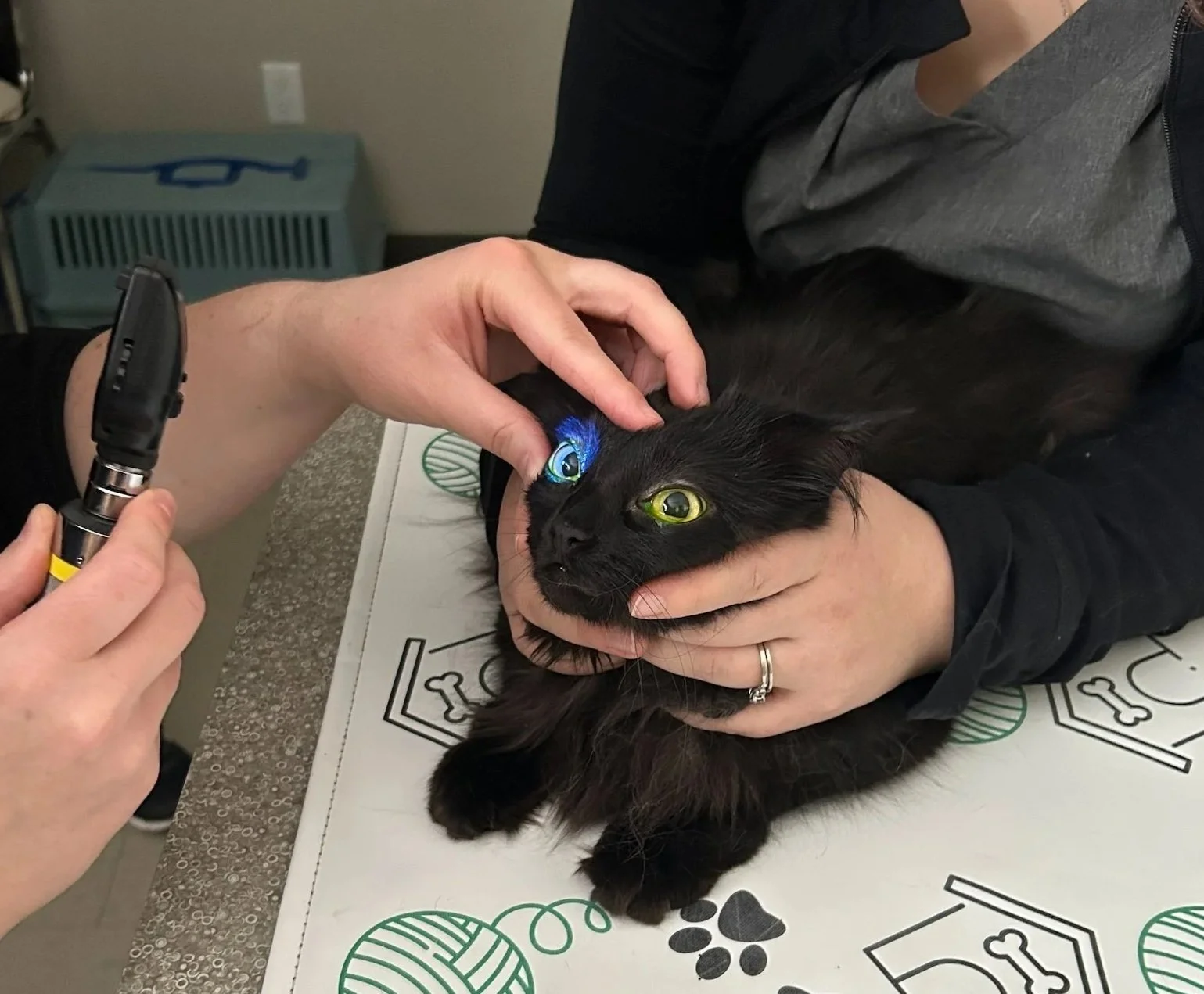
Eye stain being performed when corneal opacities were detected during a routine exam
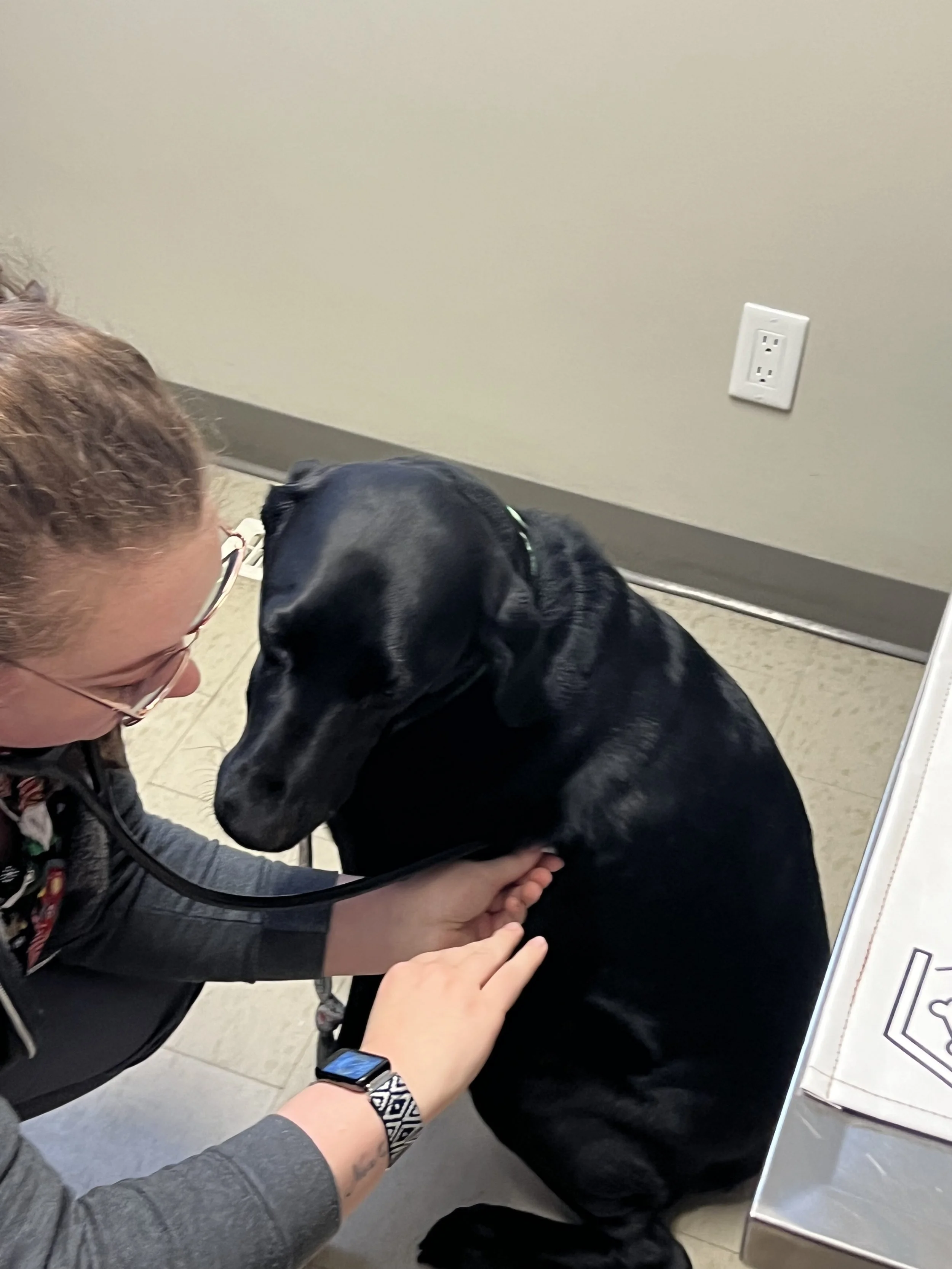
RVT performing auscultation of heart and obtaining heart rate
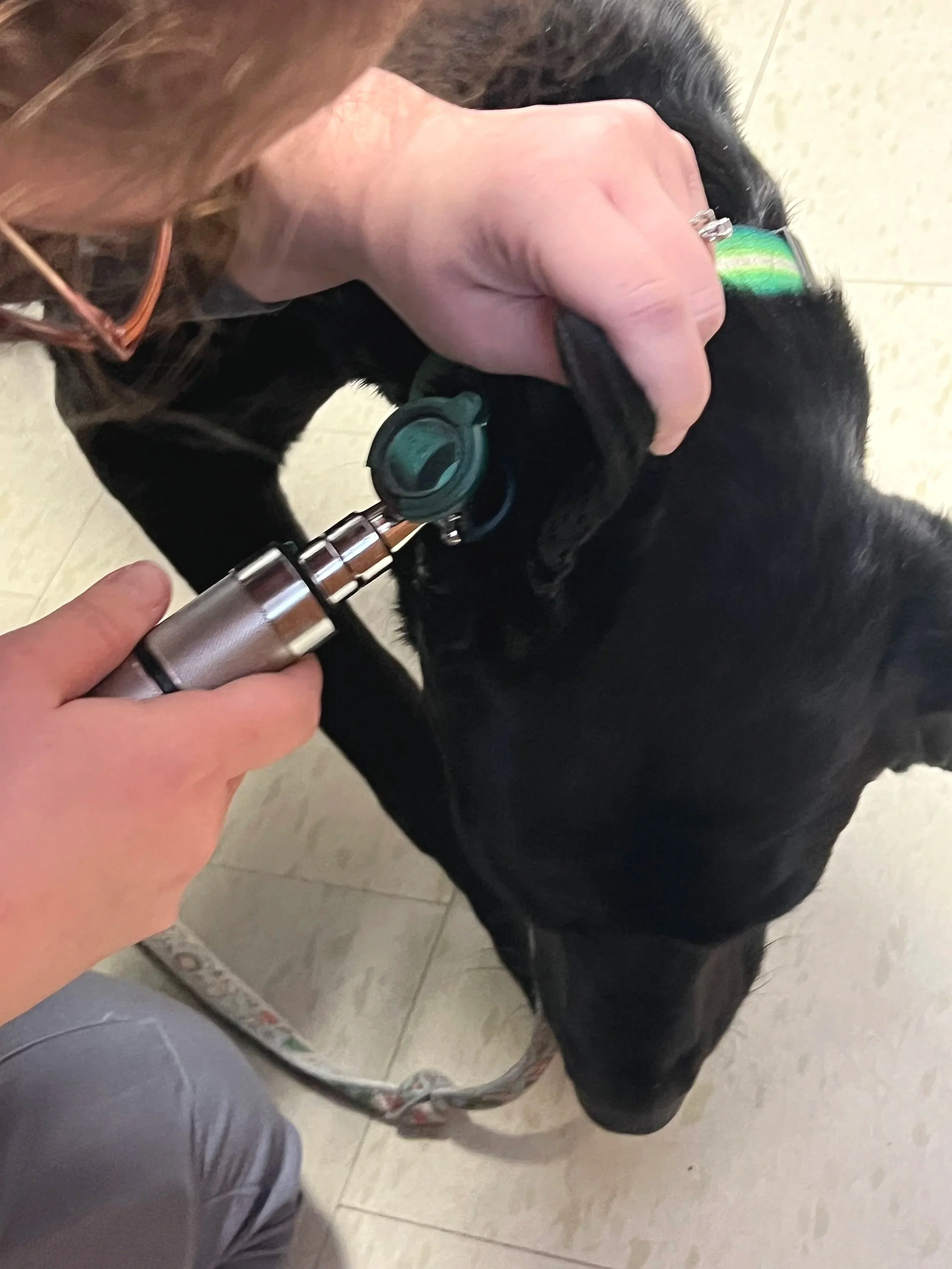
Otoscope being used to examine canine ear canal